Whitepaper

The New Industrial Playbook: AI-Driven Project Excellence

How AI is redefining industrial productivity and making complex industrial projects noticeably smarter.

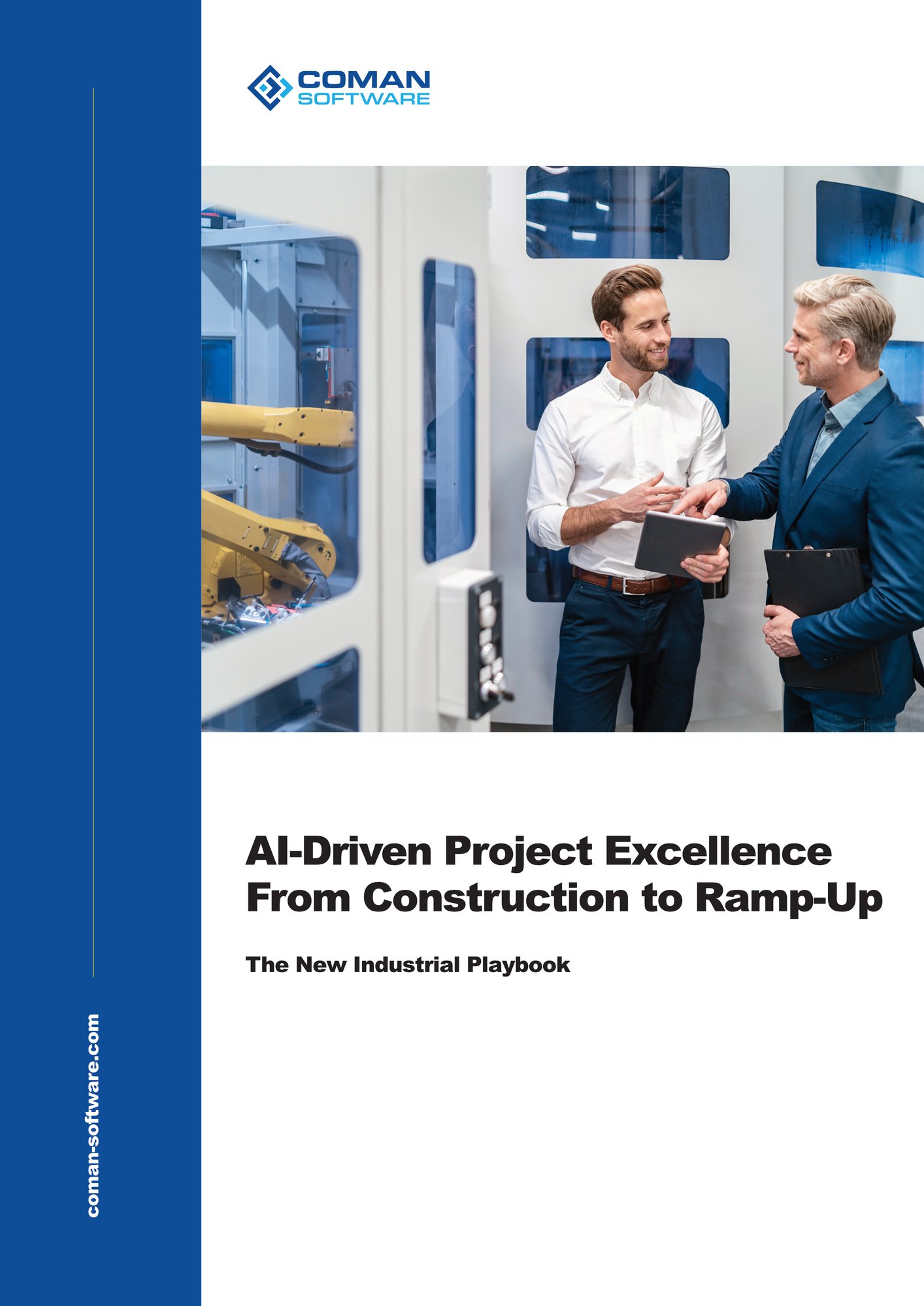
Whitepaper Cover EN - KI-Trend-Report-2026

AI as a game changer:

How intelligent data networking is making industrial projects faster, more transparent and more reliable.

This white paper shows how the digital thread with AI is evolving into an active, intelligent execution system and why now is the turning point for industrial productivity.

Key Takeaways

  • Increase productivity: Learn how AI enables data-driven decisions and reduces cycle times in industrial projects by up to 75%.

  • Detect risks earlier: AI detects delays, bottlenecks and quality deviations much earlier than traditional methods.

  • Harnessing the digital thread: How AI brings together technical data, PRoject plans, materials and supply chains in an end-to-end context for the first time.

Preview

Take a first look at our white paper now

ki-trend-report-2026-page 1-1
ki-trend-report-2026-page 2-1
ki-trend-report-2026-page 3-1
ki-trend-report-2026-page 5-1
Group 695

Industrial projects under pressure: Data, speed and complexity

Industrial companies today are faced with projects that are becoming increasingly complex: scattered data sources, overloaded teams and growing demands on quality, transparency and speed. At the same time, AI opens up enormous opportunities, provided it is integrated into existing project processes in a structured and measurable way.

Added value is only created when all those involved rely on shared data, clear structures and a consistent approach.

What you can expect:

  • Accelerated planning and installation
  • automatically recognizes progress
  • Intelligently clusters open points
  • Predicts risks at component level
  • Seamlessly integrates suppliers and trades
  • predicts ramp-up performance

Typical challenges in complex industrial projects

data-centralization

Complex data situation

Information distributed across many systems and formats

defect management

Coordination made difficult

Manual processes cost time and cause delays.

report

Lack of transparency

Project progress, risks and deviations often become visible too late.

3D Visualization

Increasing project complexity

More parties involved, more dependencies, more coordination effort.

infrastructure

Potential through AI

Data becomes usable, patterns recognizable, decisions more precise.
track

Activated digital thread

Engineering, planning and execution interlock for the first time.

collaborate

Common data basis

All project participants work on the same information basis.

Communication management-min

Making more efficient progress

Better decisions, less friction, faster project execution.

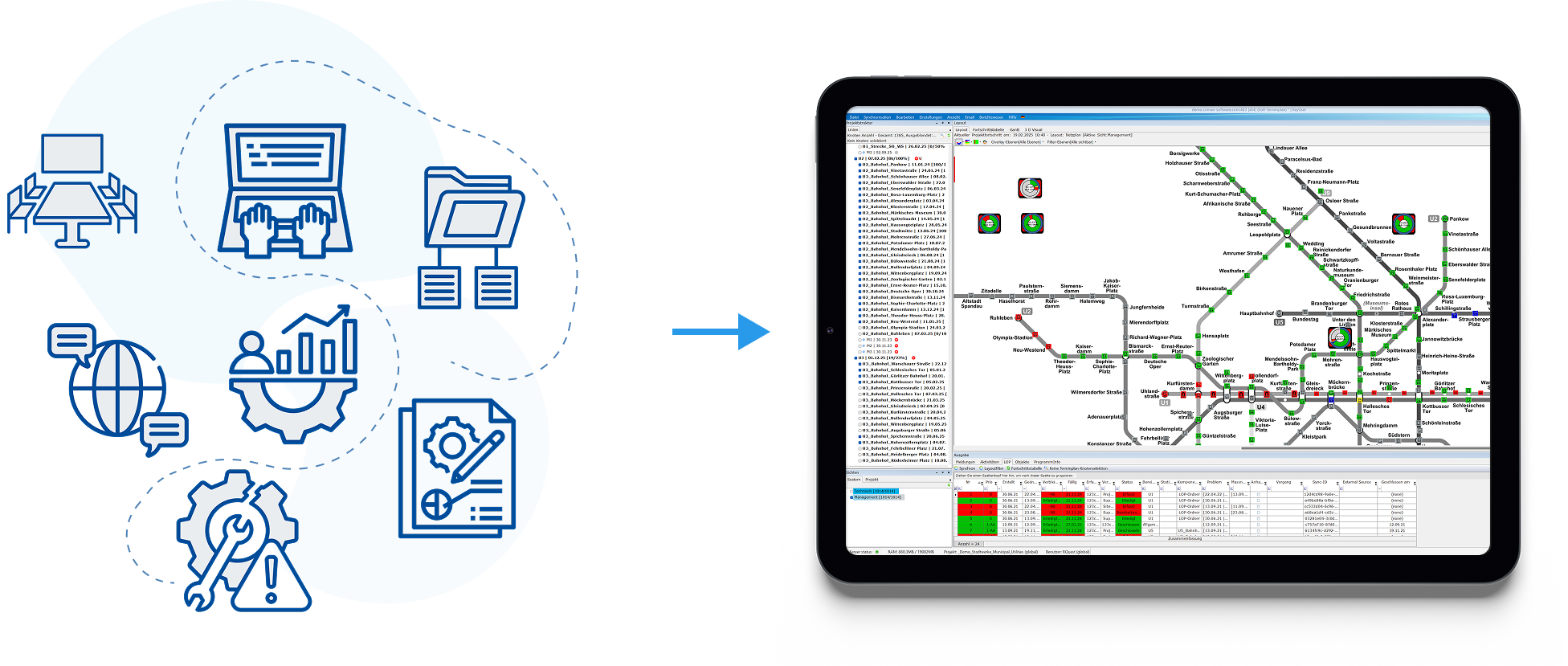
Bridging data & process gaps in industrial projects with AI

 Data sources & data AI-ready data requirements Potential AI enhancements

 PLM

Engineering structures, BOMs, change orders, versioned design data 

Stable component identifiers, traceable change histories, and controlled design versions 

AI checks model consistency, predicts change impacts, and identifies missing or outdated data 

BIM

3D models, saital data, installation constraints, class information

Structured BIM objects with spatial metadata and links to construction phases or assets 

AI compares images or scans with BIM models to detect progress, deviations, or clashes 

ERP

Procurement status, delivery data, manufacturing timelines, inventory levels

Structured supplier and order records, consistent material identifiers, and historical delivery data 

AI predicts delivery delays, suggests mitigation strategies, and identifies supplier risks 

loT / Sensors / On-site Devices

Environmental data, work progress, asset status, location tracking

Time-stamped sensor streams, calibrated signals, and reliable asset identification 

AI detects anomalies, recognizes objects, and automatically documents site activities 

Operators / Field Teams (manual input)

Progress updates, issues, punchlists, deviations

Standardized reporting templates with structured issue categories and task references 

Conversational AI enables hands free reporting, auto-filled forms, and guided next steps 

Documentation System (DMS)

Schematics, test protocols, certificates, manuals

Machine-readable documents with metadata tagging and version control 

AI auto-summarizes documents, extracts key fields,and ensures version consistency 

ki-trend-report-2026-page1
DOWNLOAD

Directly to the whitepaper

Please fill out the form and confirm the subsequent opt-in e-mail to receive the requested document.

Thank you very much 👍

Timur CCD26

“The integration of AI-driven interaction and analytical capabilities is redefining project management methodologies, giving rise to adaptive, data-driven, continuously learning workflows that exceed the structural limits of established agile frameworks.” 

Timur Ripke | FOUNDER & CEO COMAN



Markus Herhoffer CCD26

"The trend is shifting away from a single, monolithic AI platform towards a network of specialized AI agents. These agents can access the right data and tools at the right moment, enabling them to focus on distinct tasks—such as progress prediction, risk detection, documentation analysis, or commissioning support. 

 Markus Herrhofer | CTO EXP Software


Jan Berner CCD26

“The visualization of complex scenarios not only enhances conceptual understanding but also reveals questions, dependencies, and risks that would likely remain unnoticed in traditional formats. Combined with immediate question-and answer interactions, processes become significantly leaner, more efficient, and far easier to navigate" 

Jan Berner | Head of Technology and Process EDAG 

FAQ

What exactly does this white paper cover?

The white paper shows how AI actively harnesses the digital thread from engineering to execution, networks processes and reduces project complexity.

For whom is the report relevant?

For project managers, engineering teams, commissioning and ramp-up managers, OEMs, suppliers and all companies with complex industrial projects.

How does AI actually help in projects?

AI enables automatic progress detection, risk forecasts, intelligent prioritization of open issues and better coordination between trades.

What data sources does AI use in project management?

PLM, BIM, ERP, IoT data, supply chain information, manual field data and documents - AI combines these in an end-to-end context for the first time.

What practical results can we expect?

Faster decisions, fewer delays, greater transparency, better supplier coordination and realistic ramp-up forecasts.

More insight. More orientation. More project success.